Have you ever been in the anxious-avoidant relationship?
It starts well... but soon enough exhausting push-pull begins. You can't seem to break the pattern, no matter how much you love each other, no matter how long you stayed together or many times you've tried.
If any of this sounds familiar…
- You know the love is there, but something keeps getting in the way that neither of you can name or explain
- You try to share your feelings and somehow it always turns into a problem
- It feels like you keep having the same fight over and over again. Different trigger, same shape, same ending
- The silence lingers longer than it should — and nobody quite knows how to break it
- The harder you try to fix it, the worse it seems to get
- You feel misunderstood and alone even when they are next to you
- You learnt a lot about attachment styles but it's not producing a visible change
Then this guide was made for you.
Sometimes the more you talk, the worse it gets.
You can love each other genuinely, completely — and still keep triggering each other's deepest wounds.
You try harder, communicate better, give more space, reach more — but conflict doesnt' go away.
You're not failing at the relationship. You're missing the roadmap.
The anxious-avoidant dynamic is one of the most common and most misunderstood relationship patterns. Nobody ever gave you the full picture of what's actually happening beneath the surface.
This is that picture.

It's not a compatibility problem. It's not a communication problem.
It's two nervous systems, shaped by completely different histories, running survival strategies that point directly at each other's deepest fears.
- The anxious partner pursues harder the more the avoidant pulls back — because distance triggers their deepest fear of abandonment.
- The avoidant partner retreats as the anxious partner chases — because pressure triggers their deepest fear of losing themselves.
- Both feel completely justified. Both are blind to how their own behaviour affects their partner's reaction.
- Neither person is the villain. You're both stuck in a loop your nervous system built before this relationship even existed.

You're not broken. You're not fundamentally incompatible.
You're caught in a pattern — and patterns can be interrupted, once you can see them clearly enough to find the exit point.
This guide doesn't just explain the theory. It shows you the exact mechanics of what's happening between you, stage by stage, and gives you real tools to do interrupt the cycle, which usually runs on autopilot.
Whether you're still in an anxious-avoidant dynamic, just left it, or keep finding yourself back in it with different partners — this is the guide that finally helps you make sense of it.

You'll learn how to:
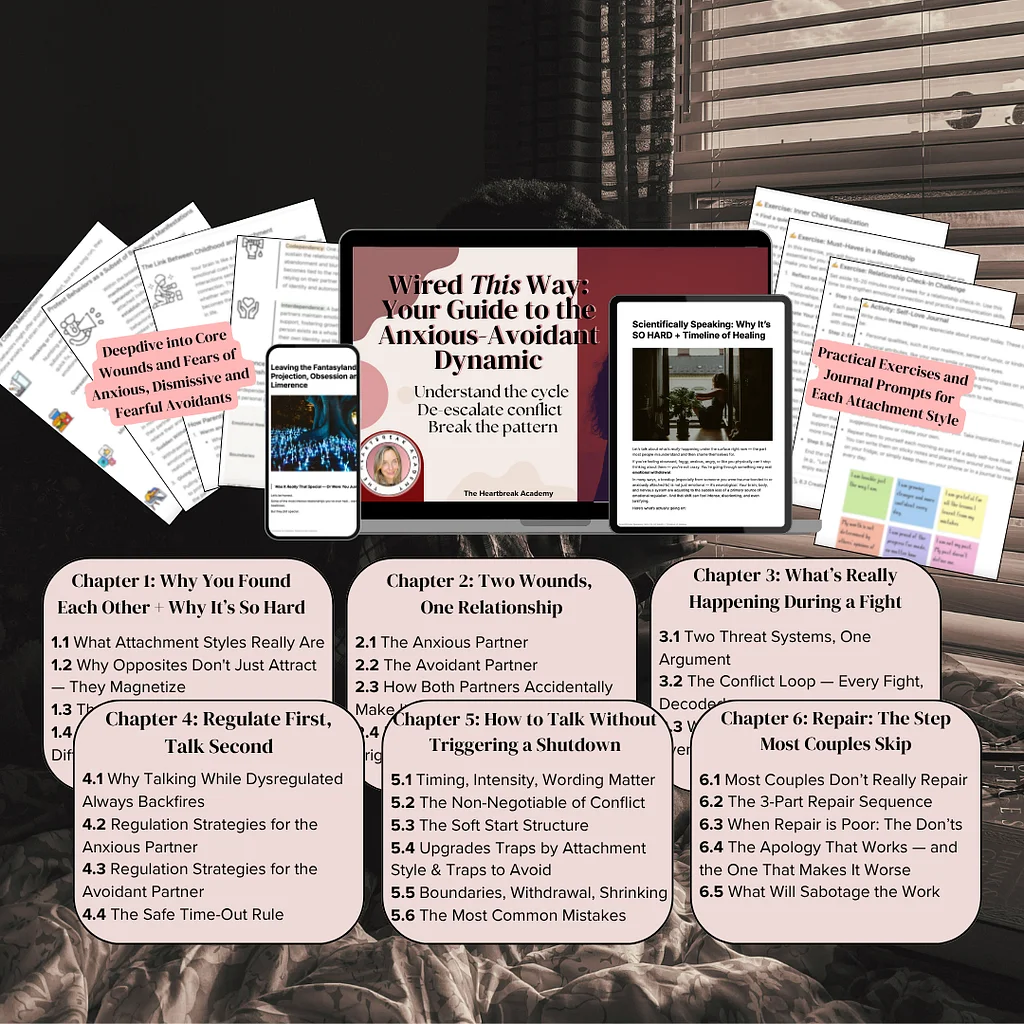
🧠 See both of you clearly — the wounds, the fears, the needs, including the differences between a dismissive and a fearful avoidant
🫁 Regulate before you talk — personalized tools for each partner so important conversations stop going sideways
🗣️ Communicate in a way that lands — a step-by-step structure that lowers defences instead of raising them
🔁 Repair properly after a fight — the 3-part sequence that closes the loop, and a list of 9 non-apologies that erode trust and connection
🛡️ Identify your non-negotiables — and how to hold up your boundaries without escalation

This guide is for you if:
- You're in an anxious-avoidant relationship that's struggling
- You just broke up and want to understand what went wrong
- You keep ending up in the same pattern with different people and want to break it
- You're the anxious or the avoidant partner (either dismissive avoidant or fearful/disorganized)
- You want to understand the other person — not just yourself
- You're ready to face your fears and start taking accountability, even if it means making difficult decisions
Whether you want to fix the relationship, understand it, or stop repeating it — this guide will help you get clear on what's actually happening and what to do about it.
You might be thinking…
"I've already read about attachment styles." Insight alone doesn't create change. This guide is more than a deepdive on the anxious-avoidant dynamic: it provides you with nervous system regulation tools for both partners to help you expand your capacity in the relationship.
"What if my partner won't engage with this?" You don't need them to. Understanding your own part in the loop — and changing your automatic responses — is where you start anyway. This interrupts the cycle, and can lead to a change in their responses too.
"We've already broken up." If you welcomed the anxious-avoidant dynamic once, it's likely to repeat — with the same person or the next one. Understanding why you chose and stayed in it now empowers you to act from a more grounded place in your next relationship.
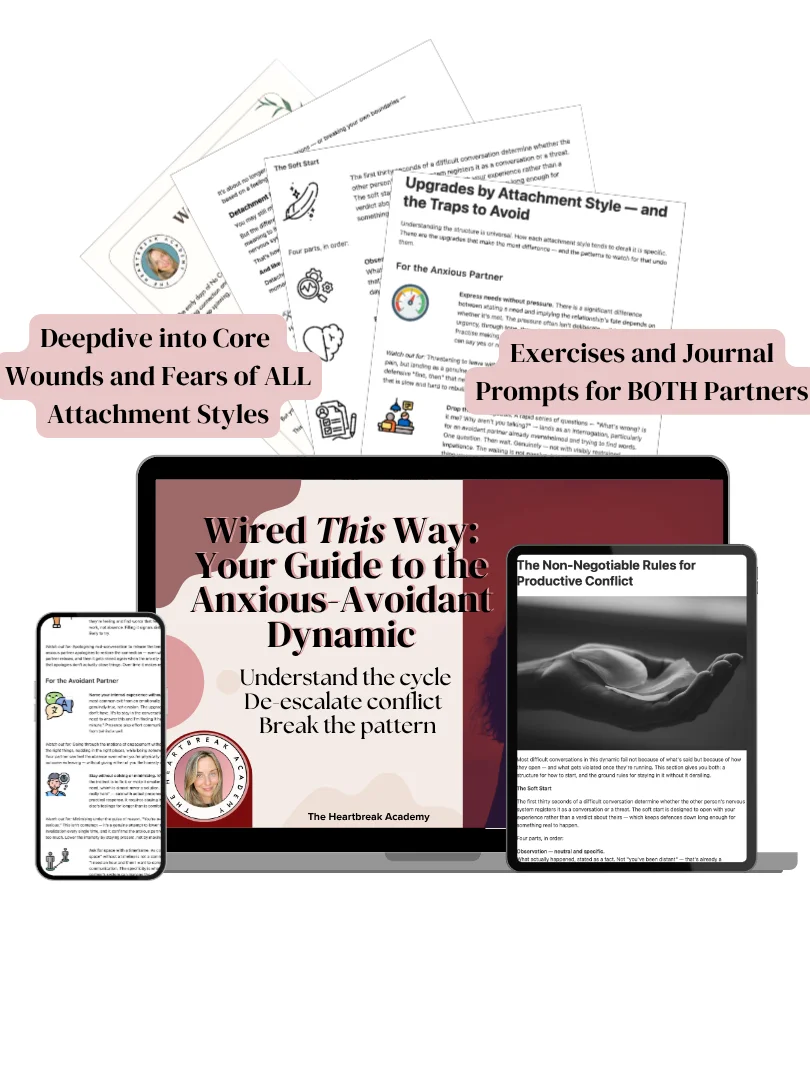
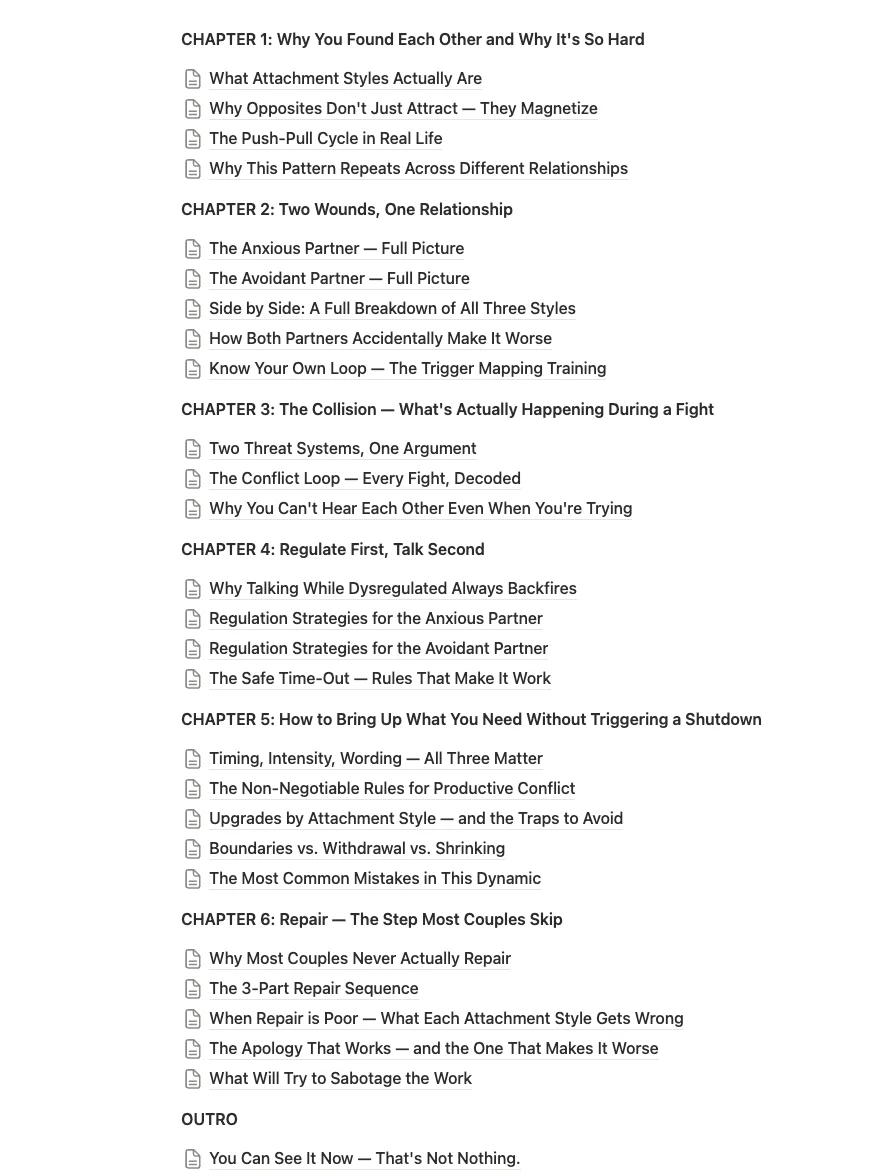
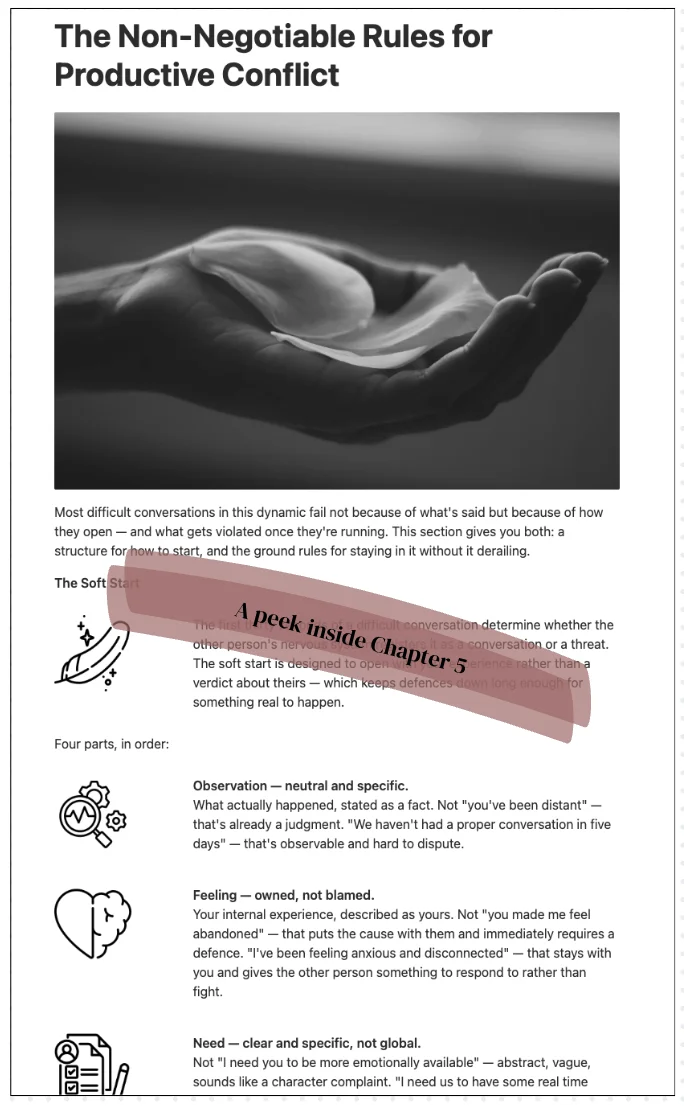
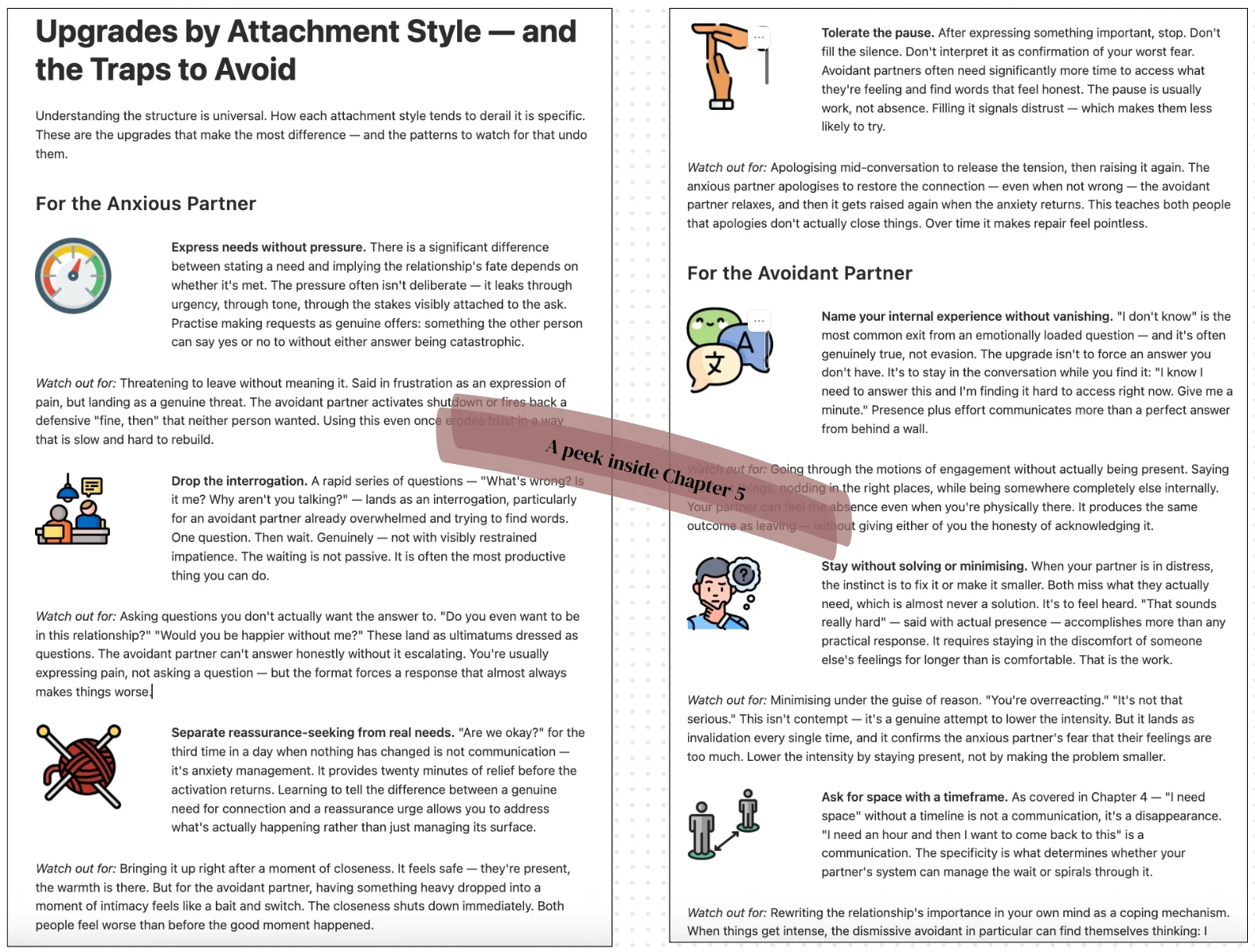
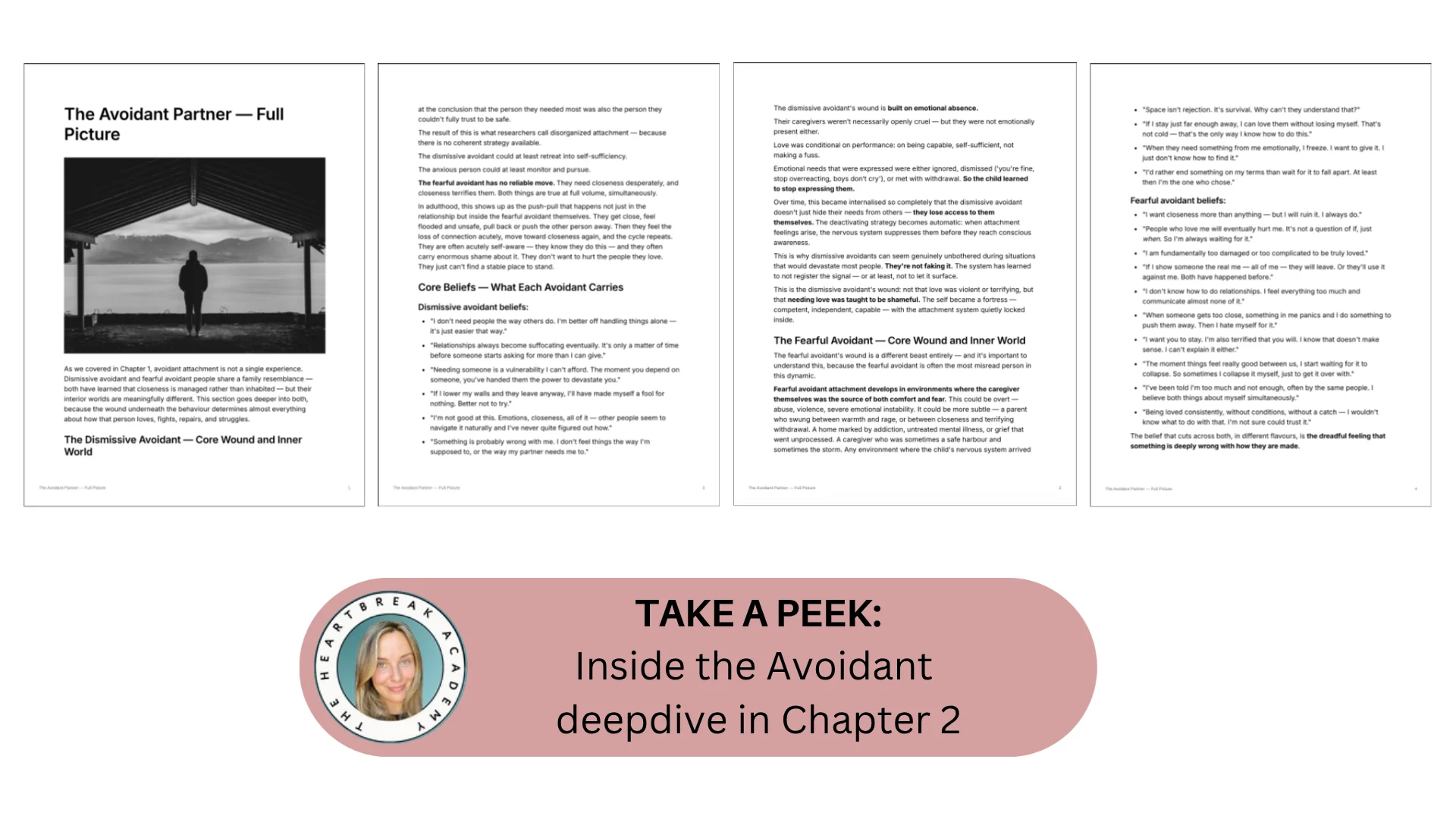
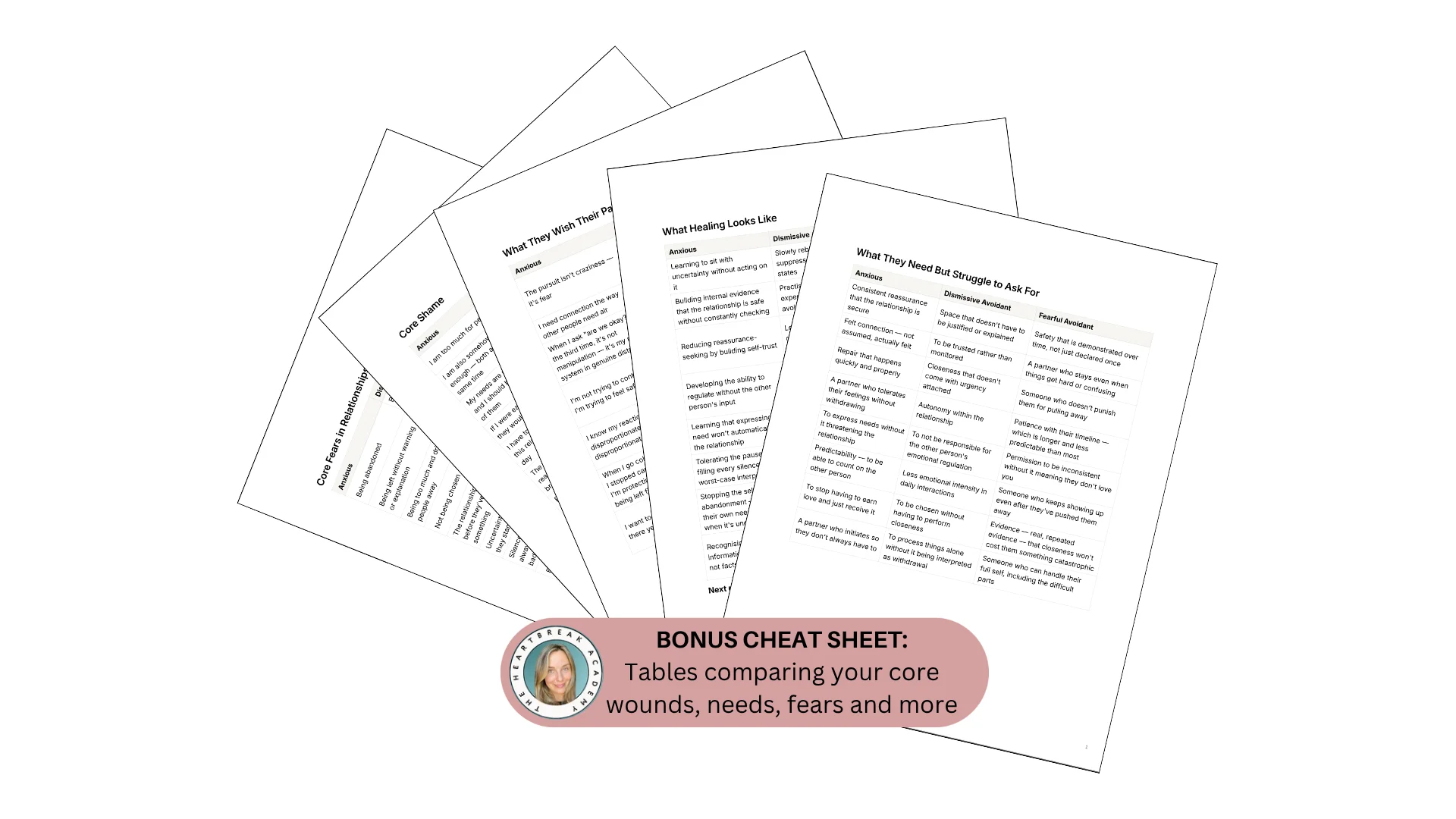
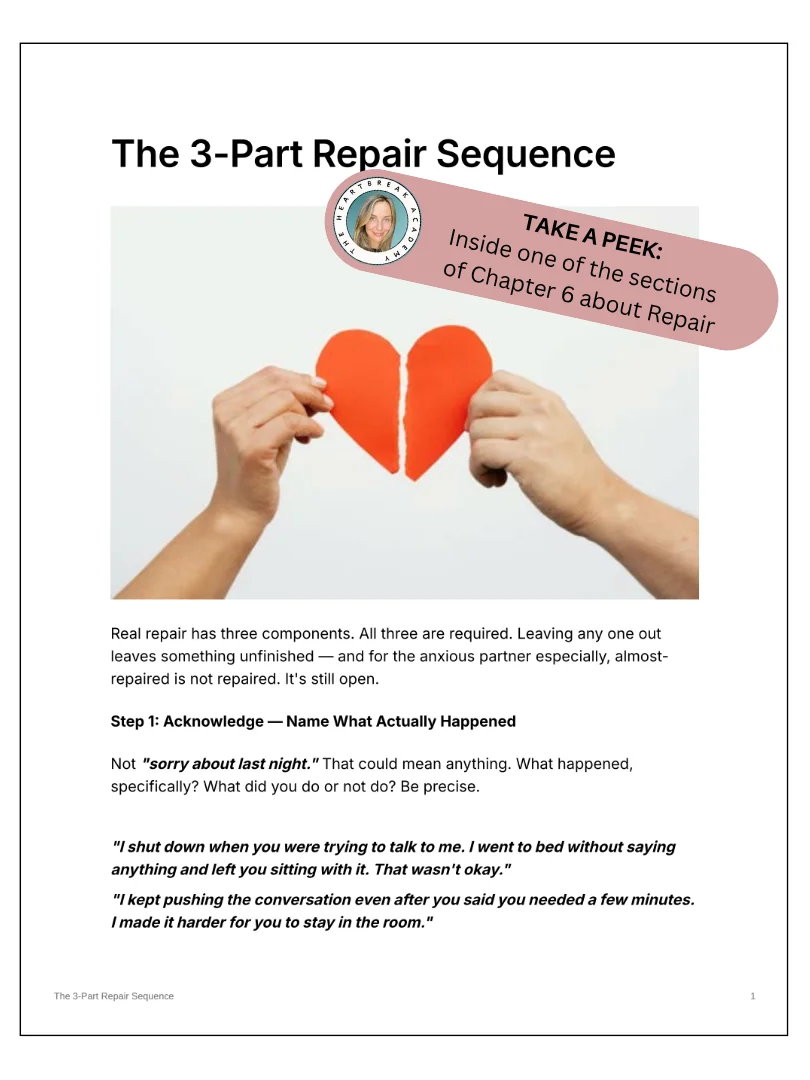
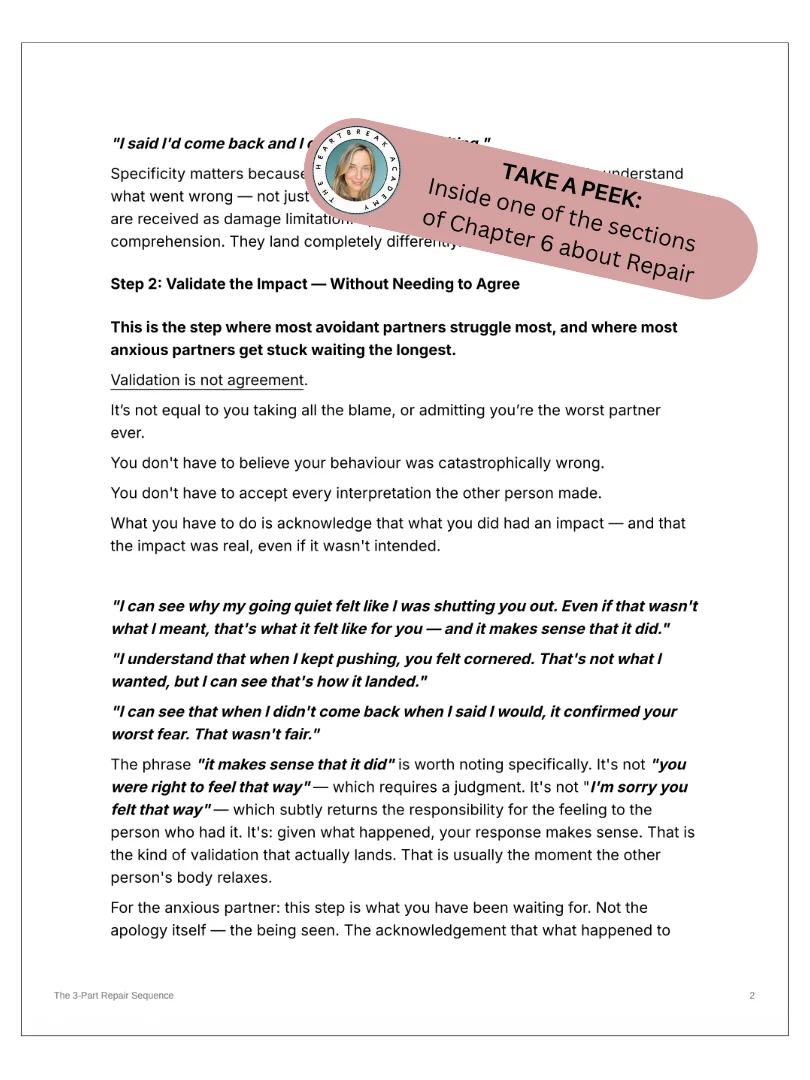
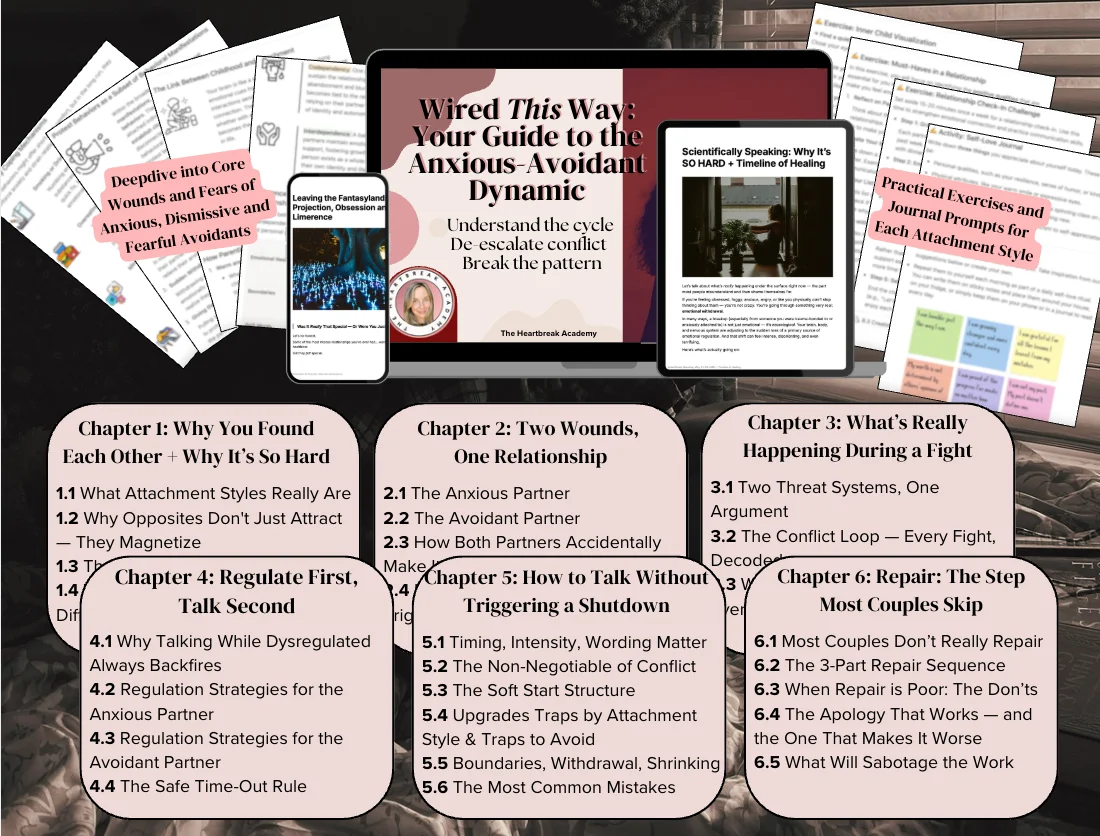
Guide to the Anxious-Avoidant Dynamic
Understand the cycle · Communicate in a way that lands · Break the pattern
Your complete guide (146 pages) to understanding the anxious-avoidant dynamic — and finally breaking the cycle of conflict, disconnection and miscommunication.
🤲🏼 Written for both partners — understand yourself and your loved one.
❤️🩹 Covers anxious, dismissive avoidant and fearful avoidant attachment styles — because they're not the same thing.
🫂 The guide that finally explains why you can't feel fully safe — even when you're both trying.
🗣️ Step-by-step communication tools, conflict techniques and repair sequences — so you stop having the same fight and start actually resolving things.
📝 Includes exercises, journal prompts and real-life examples throughout.
☑️ Ebook in 2 formats: PDF file and Notion Template
⏱️ Instant Download
⏳ Lifetime Access to the files and any future updates